Published research.
Explore original publications and the experimental questions behind them.
Read the evidence ↗ESCOZUL® / GRUPO LIFESCOZUL
A product derived from Cuban blue scorpion venom. A team ready to answer your questions.
Discover what Escozul is, explore our research and learn how our guidance and follow-up work.
Discover Escozul ↓Talk to our team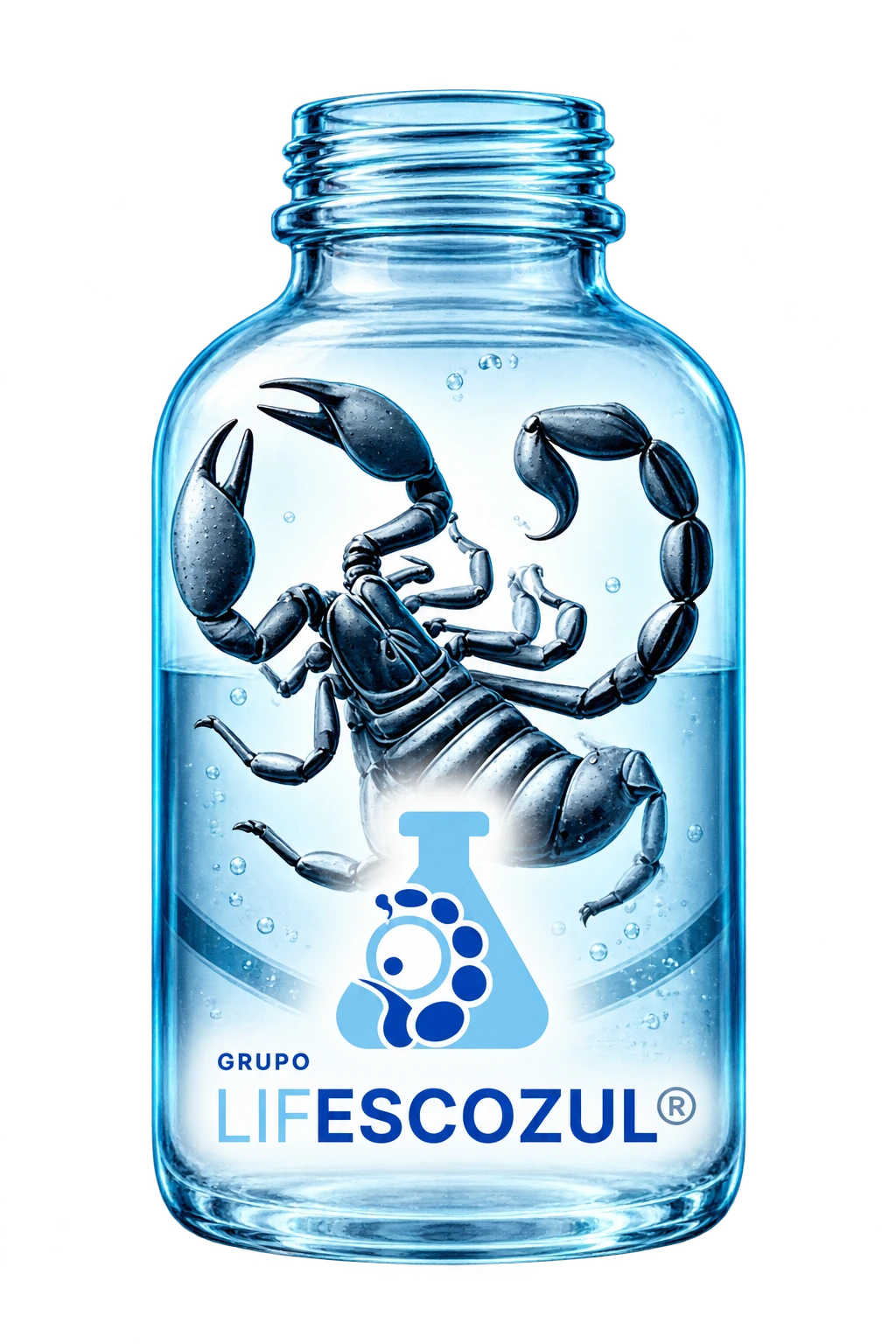
Conceptual illustration · not actual packaging

01 / OUR PRODUCT
Blue scorpion venom. Research. Personal support.
Escozul® is Grupo LifEscozul’s product derived from blue scorpion venom. Our team can explain its formulation and how our information, guidance and follow-up services work.
Ask our team about the formulation, ingredients and presentation available to you.
Escozul is our product. PBK2 is a component within a specific research line. Experimental findings do not automatically establish the product’s clinical effects.
02 / WHAT MAKES LIFESCOZUL DIFFERENT?
Scientific work you can read. The identity of the samples we study. People you can speak with.
Explore original publications and the experimental questions behind them.
Read the evidence ↗Chromatographic profiling helps characterize our research samples through their chemical fingerprints.
How we check identity ↓Ask about the product, understand the evaluation process and stay in contact with our team.
Speak with us ↗03 / THE PUBLISHED SCIENCE
From ion channels to cancer-cell responses, each study examines a different part of the question.
 Read original paper ↗
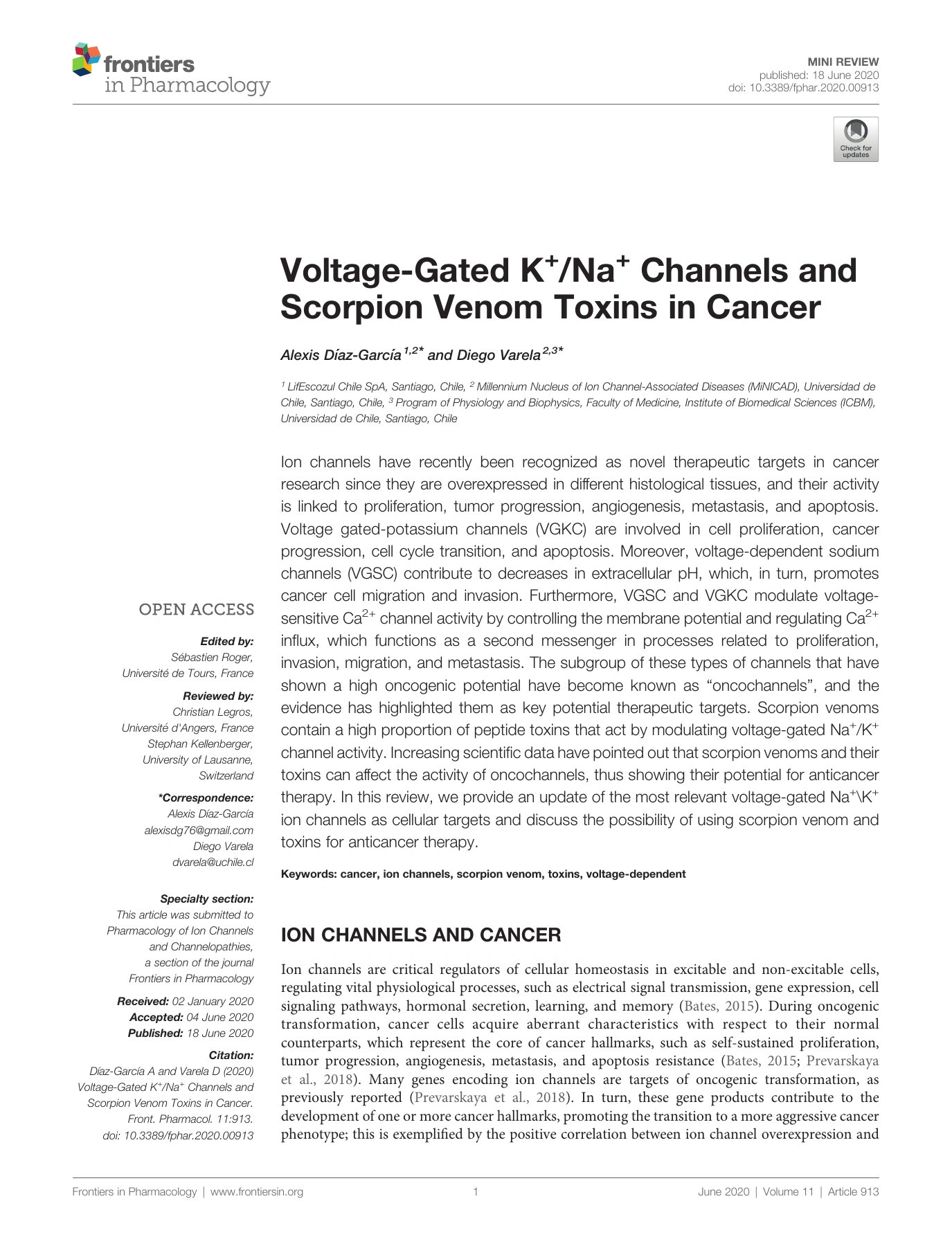
2020 / RESEARCH REVIEW
A review of potassium and sodium channels in cancer biology and the potential of scorpion toxins to investigate these targets.
Frontiers in Pharmacology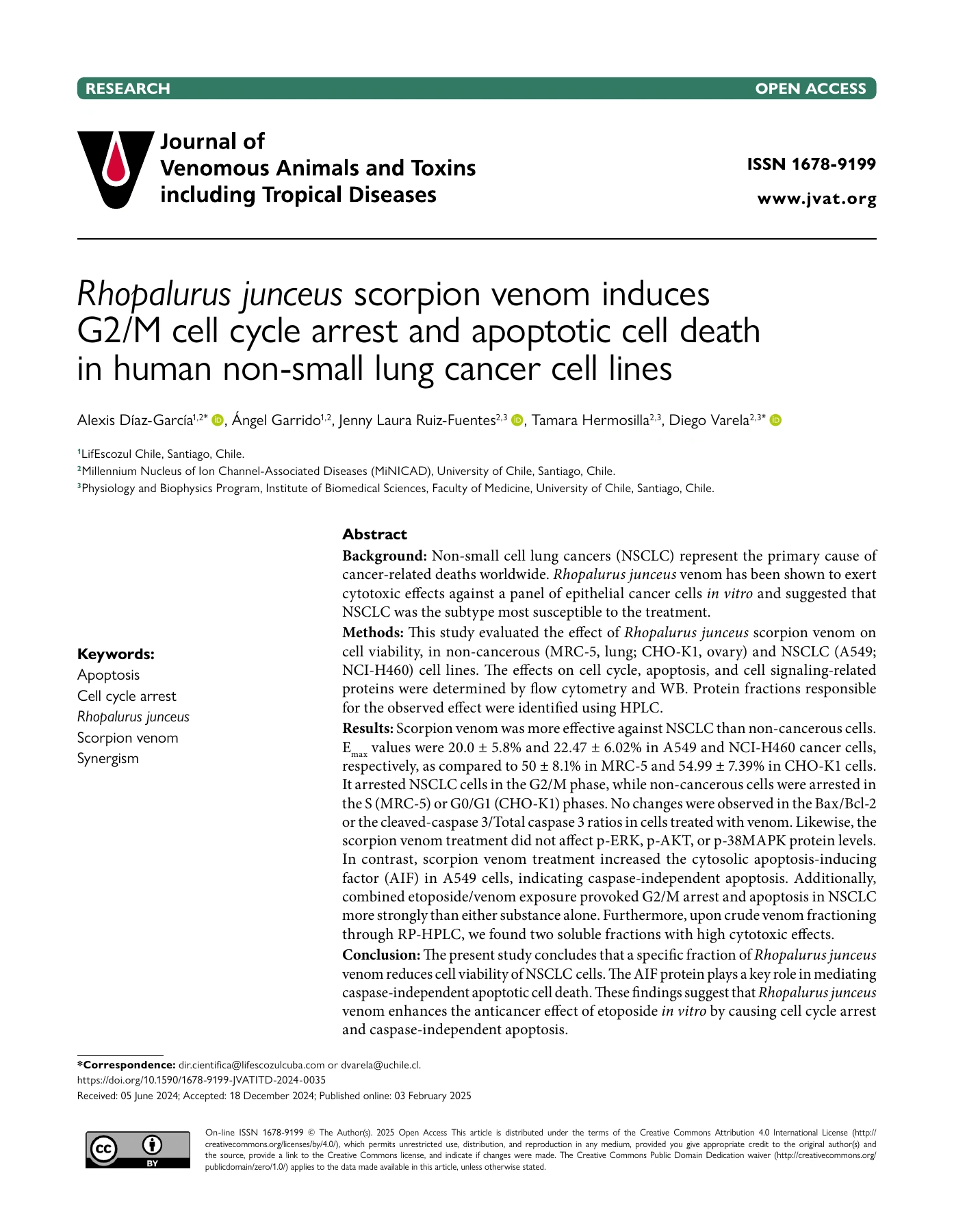 Read original paper ↗
2025 / CELL-CULTURE STUDY
Experiments with A549 and NCI-H460 lung cancer cells reported G2/M arrest and apoptosis following exposure to venom.
Journal of Venomous Animals and Toxins including Tropical Diseases Read original paper ↗
2026 / PRECLINICAL TOXICOLOGY
Research into oral acute toxicity and genotoxicity adds another dimension to understanding blue scorpion venom.
Veterinary Medicine and ScienceSelected publications. Each finding belongs to the material and experimental model studied.
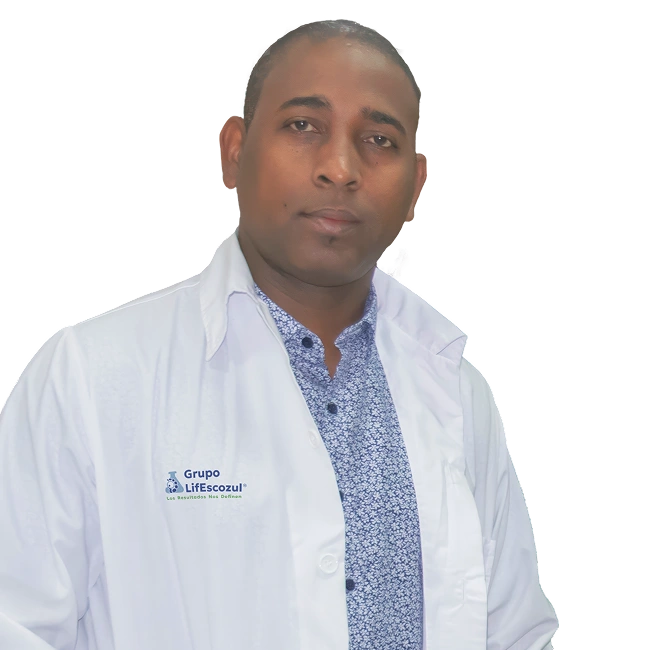
THE SCIENTIST BEHIND THE RESEARCH
Director of Research & Development at Grupo LifEscozul. Doctorate in Pharmaceutical Sciences and a master’s degree in Experimental Pharmacology from the University of Havana.
His work explores blue scorpion venom, cancer-cell responses and molecular mechanisms. His publications are part of the research you can explore here.
Explore his background ↓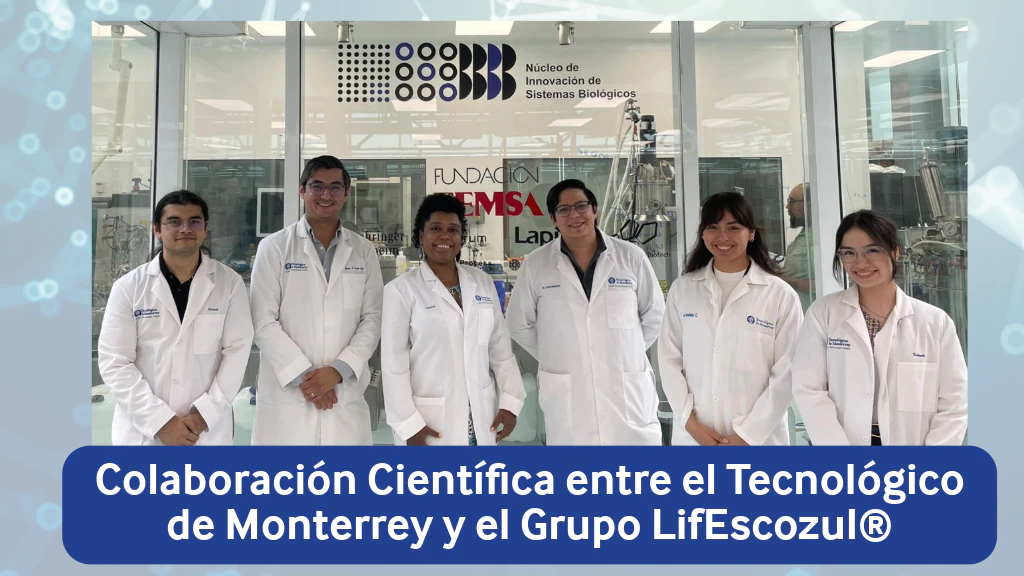 SCIENCE IS A COLLABORATIVE EFFORT.
04 / THE PEOPLE & THE PARTNERSHIPS
Grupo LifEscozul studies blue scorpion venom, its fractions and individual components to understand their biological activity and explore future applications in oncology.
Our work connects laboratory research with academic collaborations and preclinical evaluation.
05 / FROM FINDINGS TO INVENTIONS
Two published international patent applications document complementary directions in our research.
01 / VENOM FRACTIONS
Pharmaceutical compositions based on different fractions of blue scorpion venom.
WO2025241039A1 ↗
02 / PEPTIDE RESEARCH
Venom-derived peptides, variants and compositions, with migration and invasion investigated in laboratory cancer models.
WO2025241040A1 ↗What makes a peptide worth investigating?
Conceptual illustrations. These are published applications, not representations of granted patent status.
06 / SCIENCE WITH A HUMAN CONNECTION
Our team helps people understand our work, learn about our product and navigate the next steps.
Ask about the research, the publications and Escozul.
Understand how our evaluation and support process works.
Stay in contact with the team throughout your experience.
06 / FREQUENTLY ASKED QUESTIONS
Start with the venom. Meet the researcher. Understand our approach and our product.
A naturally occurring mixture of biologically active molecules produced by the Cuban blue scorpion. The species appears in the scientific literature as Rhopalurus junceus, also known as Heteroctenus junceus.
Its venom contains peptides, proteins and other components. Scientists study the whole venom, separated fractions and individual molecules to understand how each interacts with biological systems—including cancer-cell models.
This is why the exact material and experimental model matter: findings about one fraction or peptide do not describe every venom-derived product.
Scientific context: 2025 cell-culture study [1] · 2020 ion-channel review [2] · 2026 toxicology study [3]
Alexis is a researcher with a doctorate in Pharmaceutical Sciences and a master’s degree in Experimental Pharmacology from the University of Havana. His background also includes microbiology and postdoctoral work at the University of Chile.
His research explores the biological activity of blue scorpion venom, cancer-cell responses and molecular mechanisms. He is an author of the ion-channel review and experimental lung-cancer study featured on this page.
Background: Official scientific biography [4] · Published work: [1] [2]
Our approach brings scientific research and personal support together. We investigate blue scorpion venom and its components while helping people understand our work, our product and the process of engaging with our team.
Published studies, academic collaborations and patent applications with original documents you can read.
Answers to questions, guidance through the evaluation process and ongoing communication and follow-up.
That combination—research, product information and accompaniment—defines how we work with our community.
Explore: Academic collaboration [5] · Our services [6] · Patent applications [8]
Escozul® is Grupo LifEscozul’s product derived from blue scorpion venom. Ask our team for the formulation, ingredients and presentation available to you.
A specific U.S. presentation has a label published on DailyMed under NDC 87019-001-01. That record does not cover every formulation or presentation and is not FDA approval. Confirm the exact product with our team.
Escozul is the finished product. PBK2 is a peptide within a specific research line. The venom and fractions examined in laboratory studies are not interchangeable with the finished formulation.
Our team can explain the product information and the support services available to you.
Product reference: U.S. product label on DailyMed [7]
Ask our team about Escozul ↗In this research tradition, the term has a Cuban history and a specific scientific identity: Rhopalurus junceus, now known as Heteroctenus junceus, a species endemic to Cuba.
Cuban biologist Misael Bordier helped bring this research to international attention. A 2001 interview already used the Spanish term for blue scorpion venom. A 2011 scientific paper explicitly characterized the venom of the Cuban blue scorpion.
Presenting another species’ venom as though it were the venom studied in this Cuban research is misleading. The same name does not justify attributing findings obtained with one species to another.
Our venom samples have undergone chromatographic profiling at Tecnológico de Monterrey, the University of Chile and a laboratory in the United States.
This separates the sample’s components into a chemical fingerprint. Comparison with a reference using the appropriate method provides evidence of identity and consistency.
Ask our team about the sample tested, the laboratory and the analytical report. Analysis of a research sample does not automatically certify every bottle sold.
Ask about sample analysis ↗Ask for the scientific species name, the analytical report, the laboratory responsible and the identification of the sample or batch tested.
Also ask how those documents relate to the product you will receive. Trust should be supported by verifiable documents and product traceability.
READ THE ORIGINAL SOURCES
Scientific papers, institutional information and product documentation—each with its own role in the story.
Díaz-García et al. Journal of Venomous Animals and Toxins including Tropical Diseases.
DOI: 10.1590/1678-9199-JVATITD-2024-0035
Díaz-García & Varela. Frontiers in Pharmacology.
DOI: 10.3389/fphar.2020.00913
Díaz-García et al. Veterinary Medicine and Science.
DOI: 10.1002/vms3.70872
Education, scientific experience and research background, as described by Grupo LifEscozul.
Read his biography (Spanish) ↗Tecnológico de Monterrey’s report on its scorpion-venom research collaboration.
Read the report (Spanish) ↗Grupo LifEscozul’s description of its services and the process for people interested in its program.
Explore our services (Spanish) ↗U.S. product labeling, ingredients and listing information. DailyMed is hosted by the U.S. National Library of Medicine.
Read the U.S. label ↗Original application documents describing the claimed inventions and their research context.
WO2025241039A1 ↗WO2025241040A1 ↗START A CONVERSATION
Whether your question begins with a publication or with Escozul, we’re here to help you understand.
servicios@lifescozulcuba.com